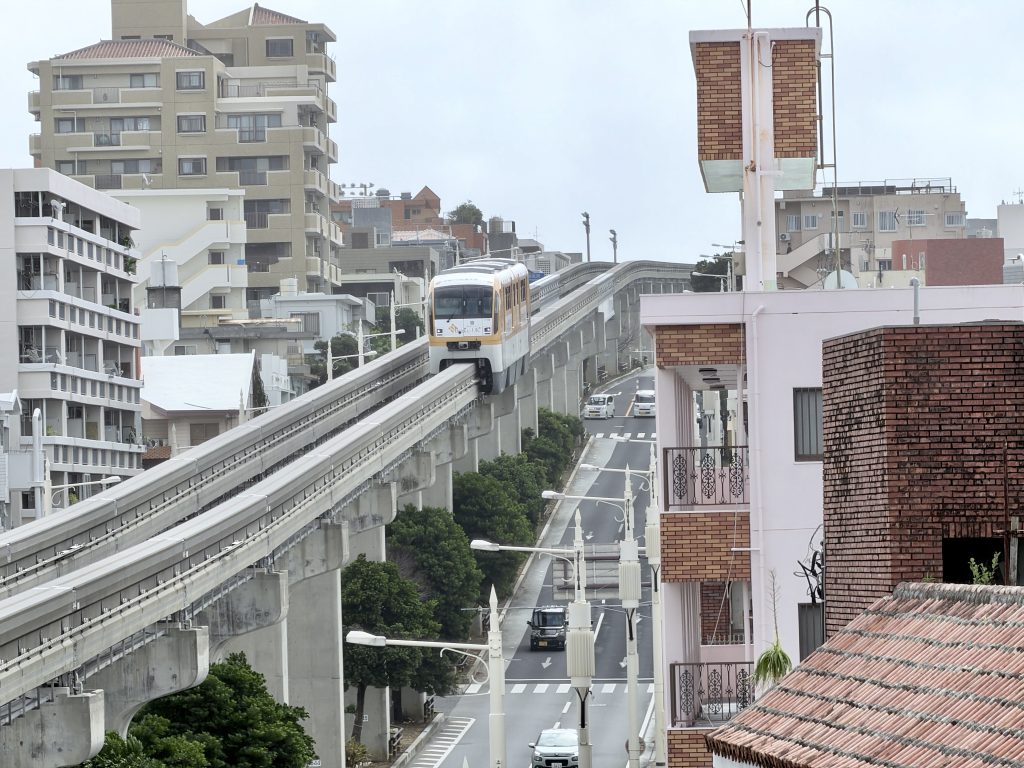
Today we spent the full day exploring Naha, the capital city of Okinawa. The remnants of Typhoon Champi were apparent thanks to the 90% humidity, 85 degree heat and 25 mile an hour blustery winds (which actually felt quite nice given the humidity), but we feel very lucky that the Typhoon did not have a bigger impact on our visit. On our travels today we added yet another form of transportation to our trip – a monorail! Not surprisingly, Okinawa’s public transportation system is not as robust as mainland Japan’s systems, but still very convenient.
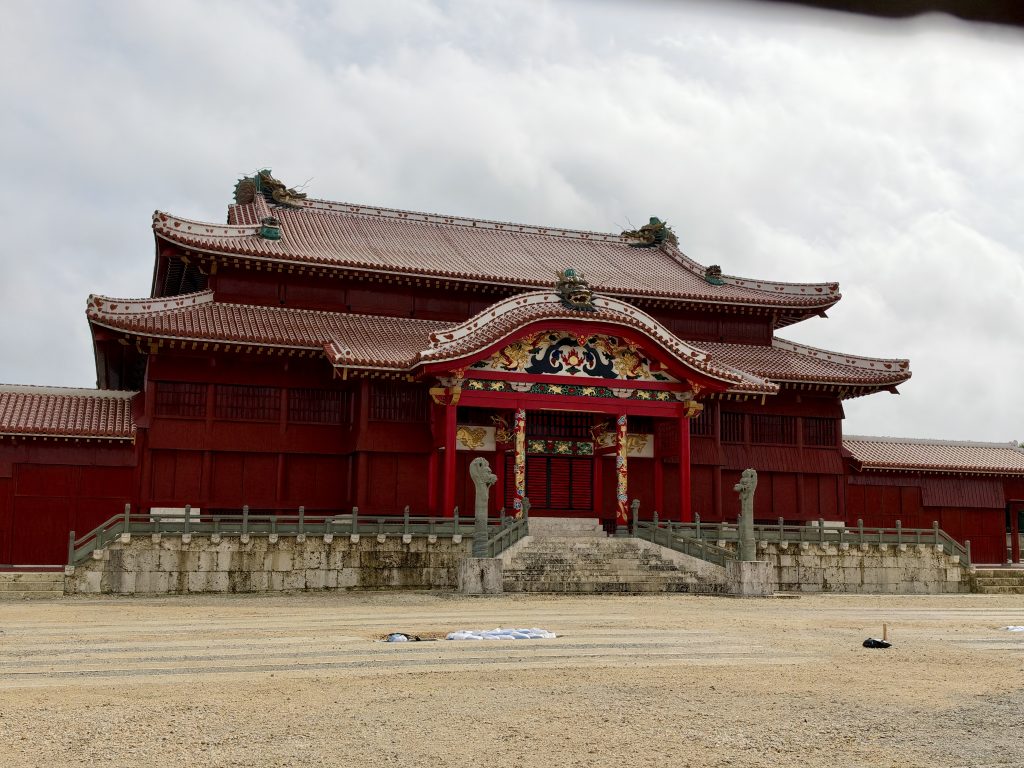
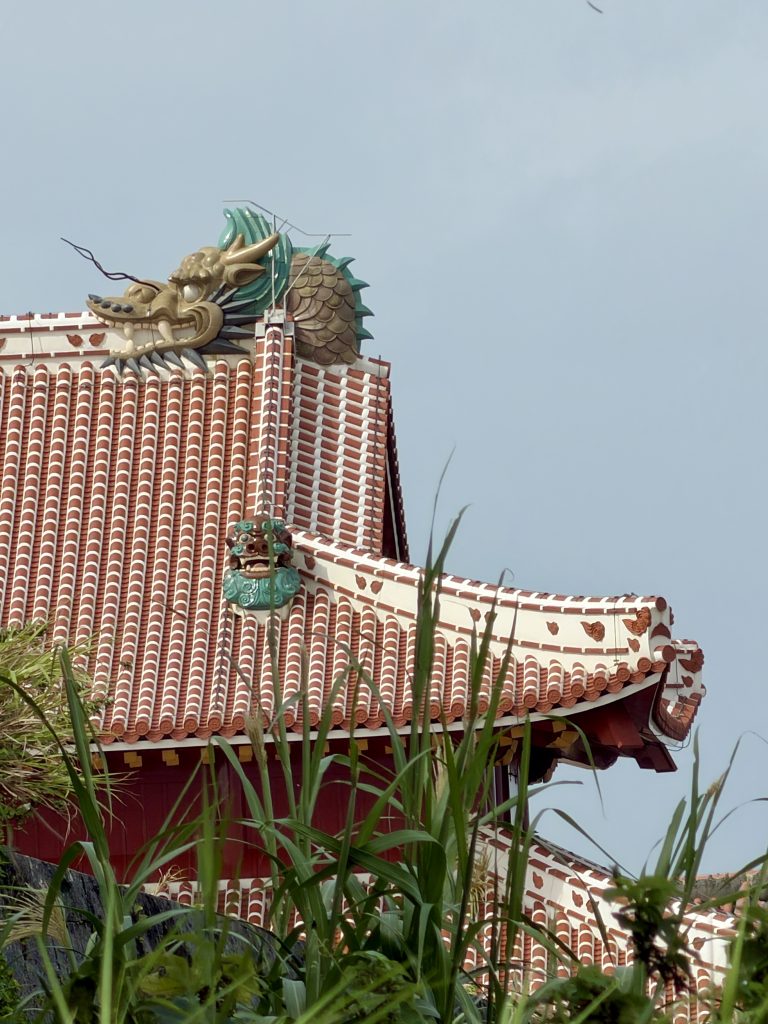
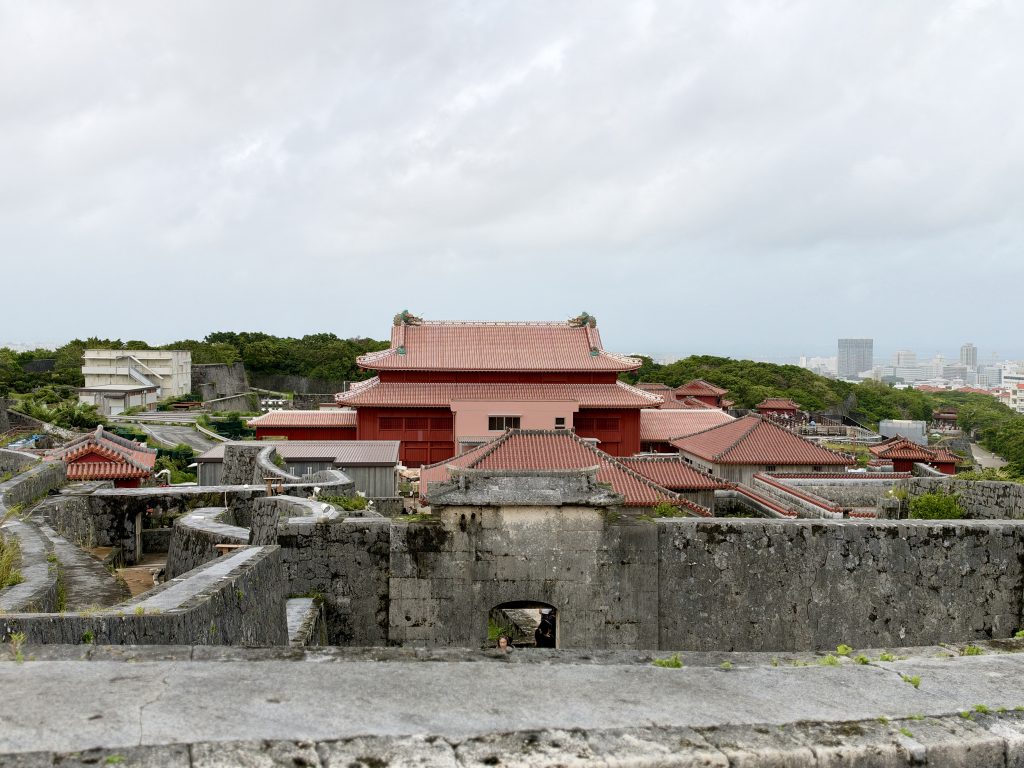
We started the day with Shuri Castle, the palace and center of the Ryukyu Kingdom, a thriving and independent island society between 1429 to 1879, when Japan annexed the islands and established the Okinawa Prefecture that exists today. The castle was divided into distinct areas: a ceremonial area, residential area for the royal family and an administrative area. Unfortunately, the castle has been subject to many fires and fell victim to the bombings of World War II. Today, the castle is still being restored to its original grandiose stature; however, the active restoration creates a fascinating dichotomy of old walls remaining from the original castle and newer restored buildings.
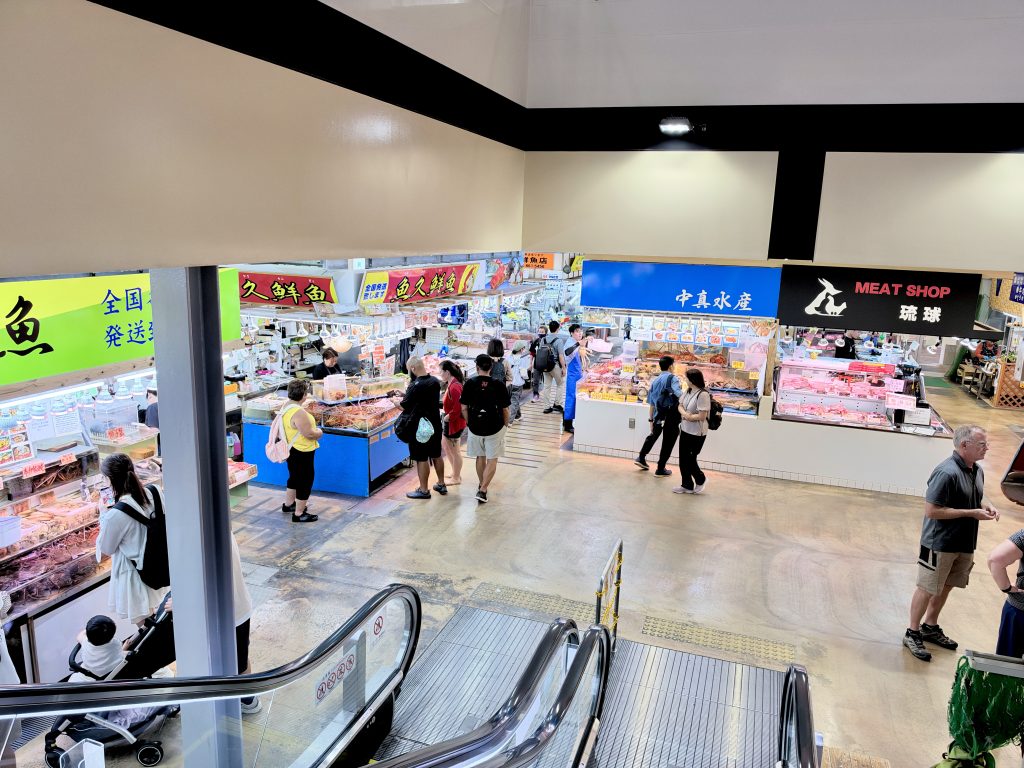
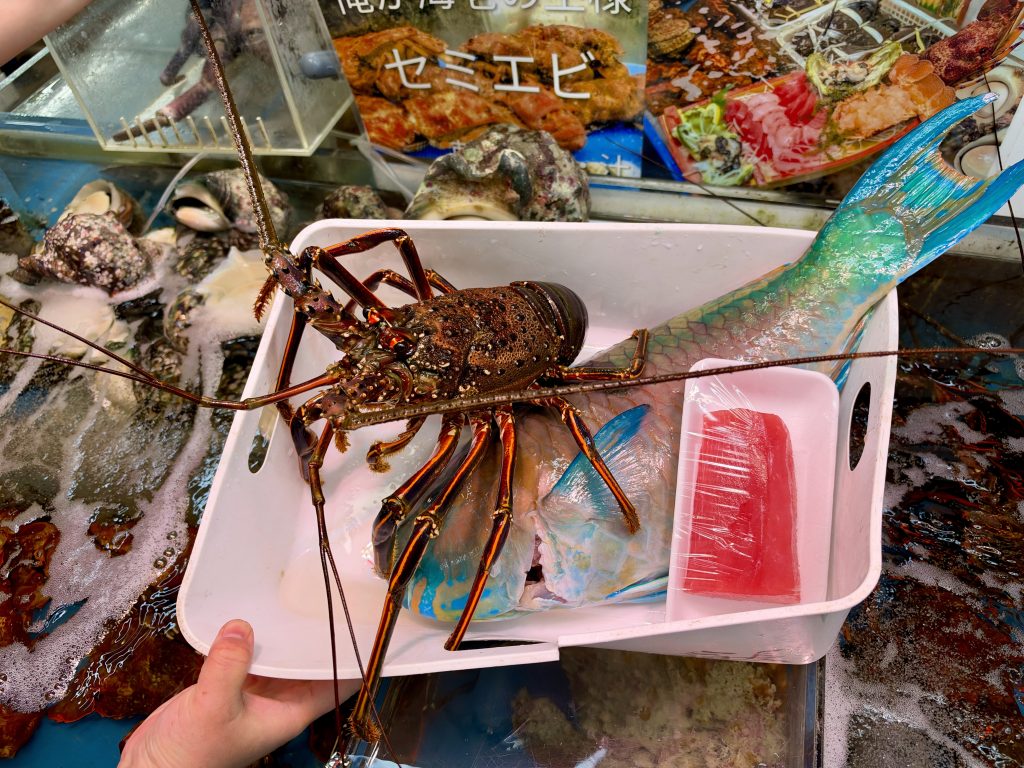
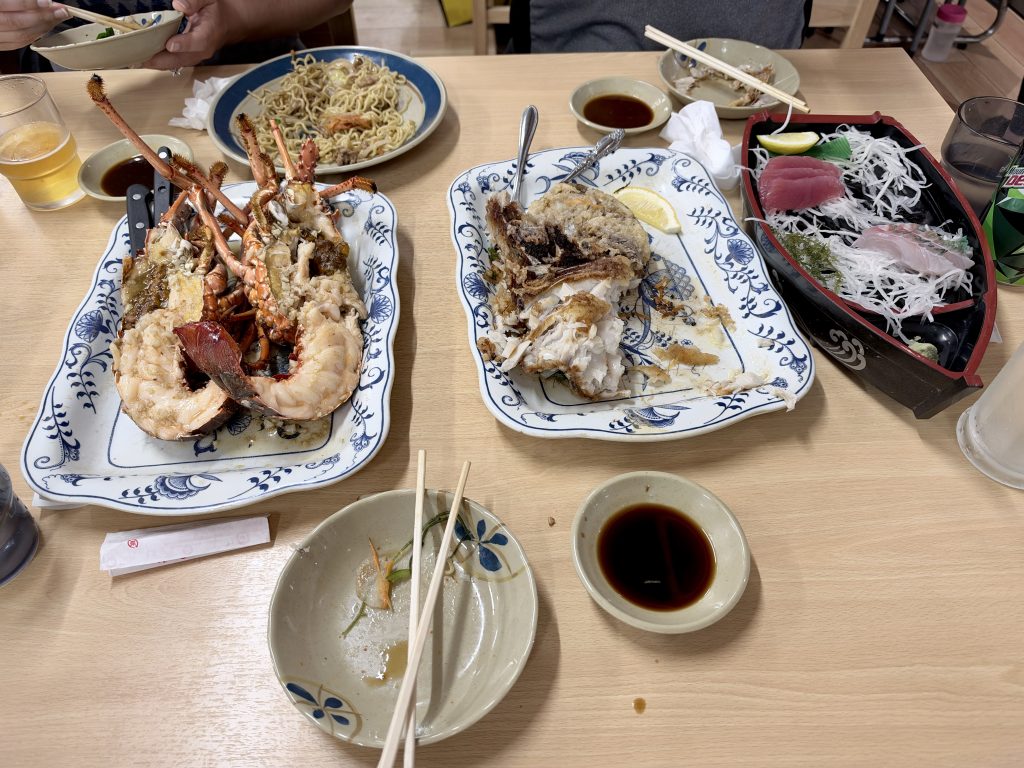
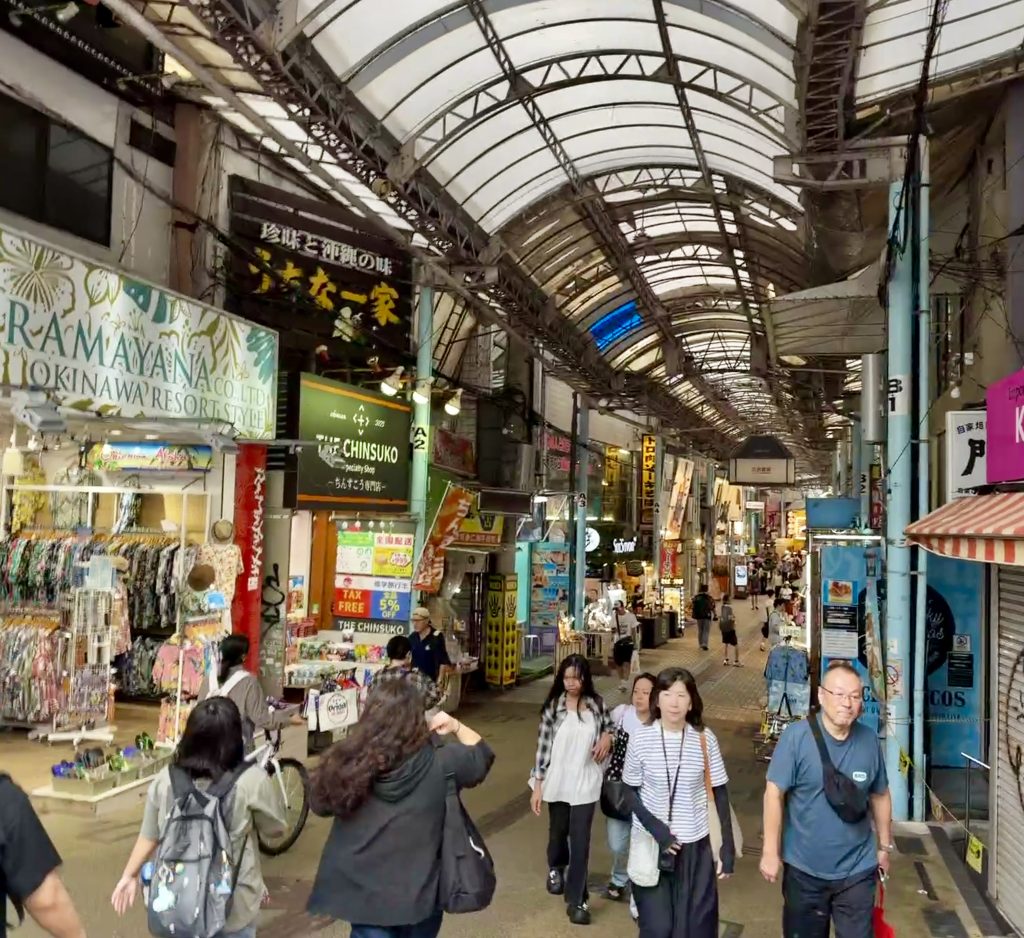
Being around lunchtime, we headed to Makishi Public Market through the Kokusai shopping street past a whirlwind of vendors. Makishi is famous for being a multi-level market where patrons can browse the vendors’ selections on the first floor, ranging from live shellfish to fresh fish and meat markets, and after making a selection heading upstairs to have the chefs prepare the delicacies. Being foodies, this was right up our alley and we selected a fish vendor who helped us create our own feast in which we selected our live lobster, a parrotfish and tuna. After simply asking what she recommended and just nodding and excitedly agreeing to whatever she proposed (in Japanese, so we really had no idea what we were getting into), we headed upstairs and enjoyed a wonderful meal of fish prepared three ways: sashimi, fried and sautéed in garlic butter.
With full bellies, we meandered through Tsuboya Pottery District. Okinawa is famous for beautiful pottery, most pointedly in striking blue, known as yachimun. We would have loved to bring some pottery home with us, but one of the only downsides of our practice of “travelling light” (carry-on suitcases only) is that we were unable to accommodate the room (or the risk that it would not make it back in one piece).
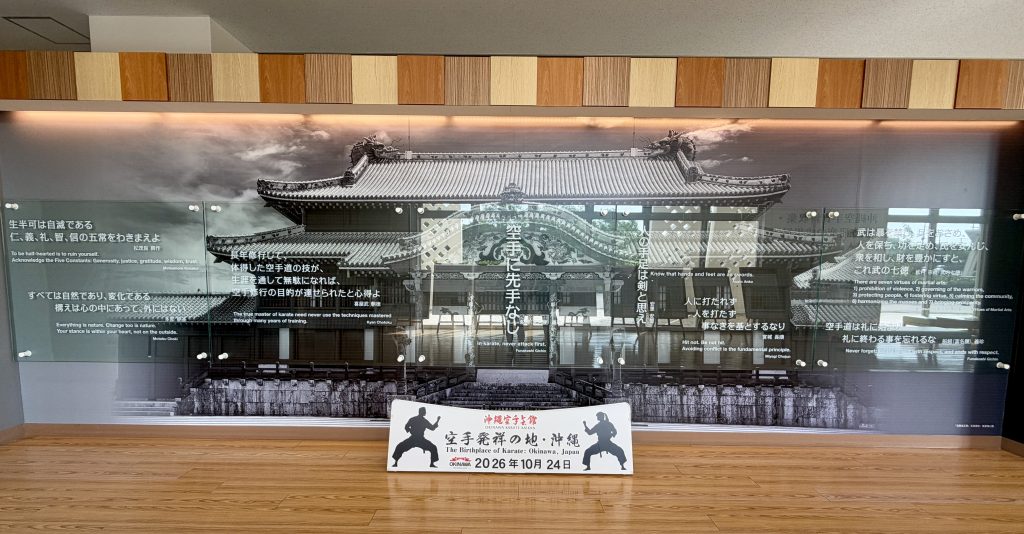
In the late afternoon we headed across town to one of the quintessential Okinawan staples – the birthplace of Karate. Although there are almost no records or documents to confirm how, when or by whom Okinawan karate came to be, it is speculated that karate derived from the practices of the samurai along with the fact that Okinawan’s were not allowed weapons, so they developed self-defense mechanisms. Since its inception, Okinawan karate has developed into multiple styles but the general principals remain the same: Karate is about self-defense, avoiding conflict and a sense of calm and centering. Something we could all benefit from.
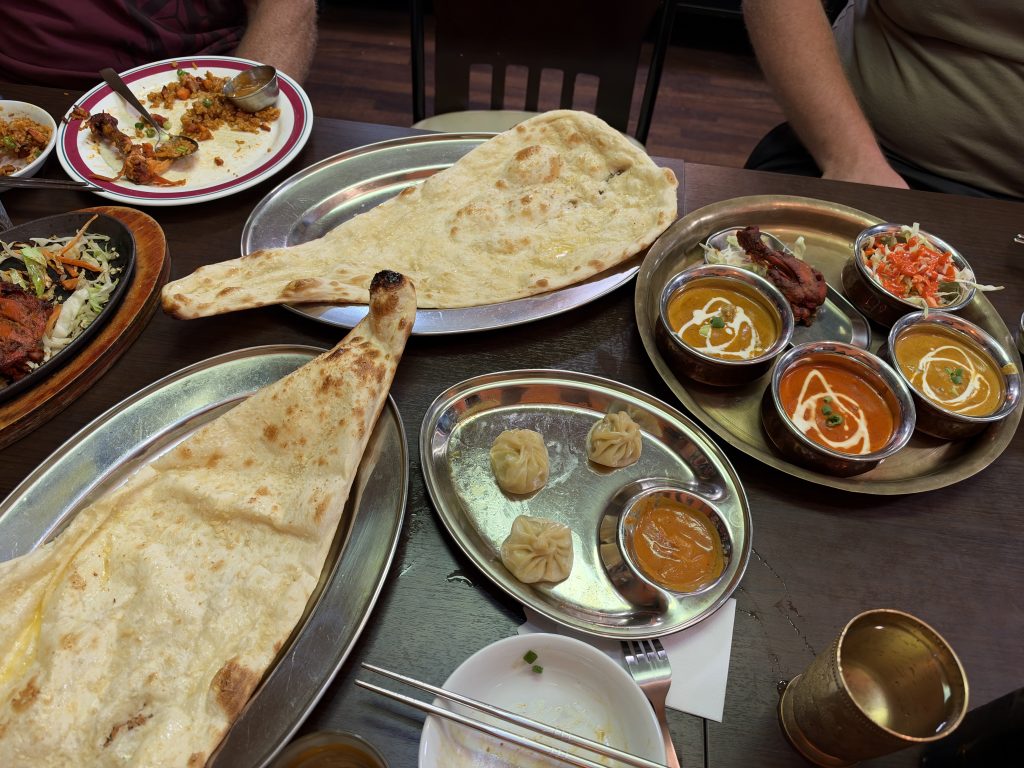
Our final adventure of the evening was picking up our rental car for our journey to the north end of the island, which we start tomorrow. Jay will have the pleasure of driving on the right side of the car on the left side of the road (opposite from the United States) – for the second time in 2026. On our drive home the sky opened up into a torrential downpour (thank you, Typhoon Champi) which made navigating the other side of the road, along with learning where the wipers on the new car were and trying to figure out where we were going all at the same time, even more exciting! By the time we arrived back at our hotel we were eager for dinner and we enjoyed a wonderful Himalayan meal. If anyone has any good recommendations for Himalayan food in the Seattle area, please let us know as we would love to have this cuisine more often!
We end today’s post with a fun fact about Okinawa: it has one of the world’s highest concentrations of centenarians (people 100 years old or older) in the world. It certainly would be a very nice place to grow old.
Leave a Reply
You must be logged in to post a comment.