As our vessel prepared to transit during the night to our next stop, the exterior lights were dimmed in order to allow the feeding frenzy to dissipate. We said goodbye to the Galapagos sharks and the flying fish as we headed eastward into the dark open waters surrounding the islands for another night of rough seas – a small price to pay to explore this natural paradise.
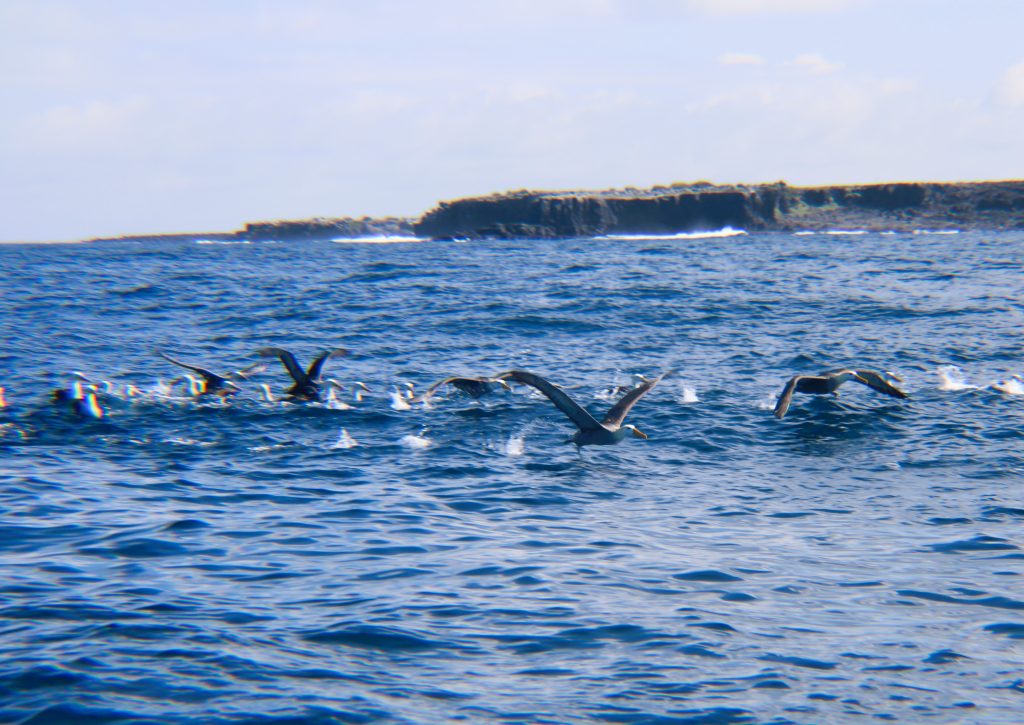
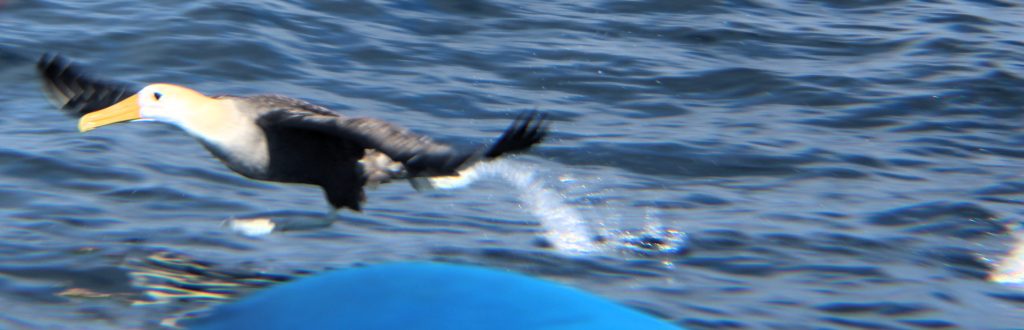
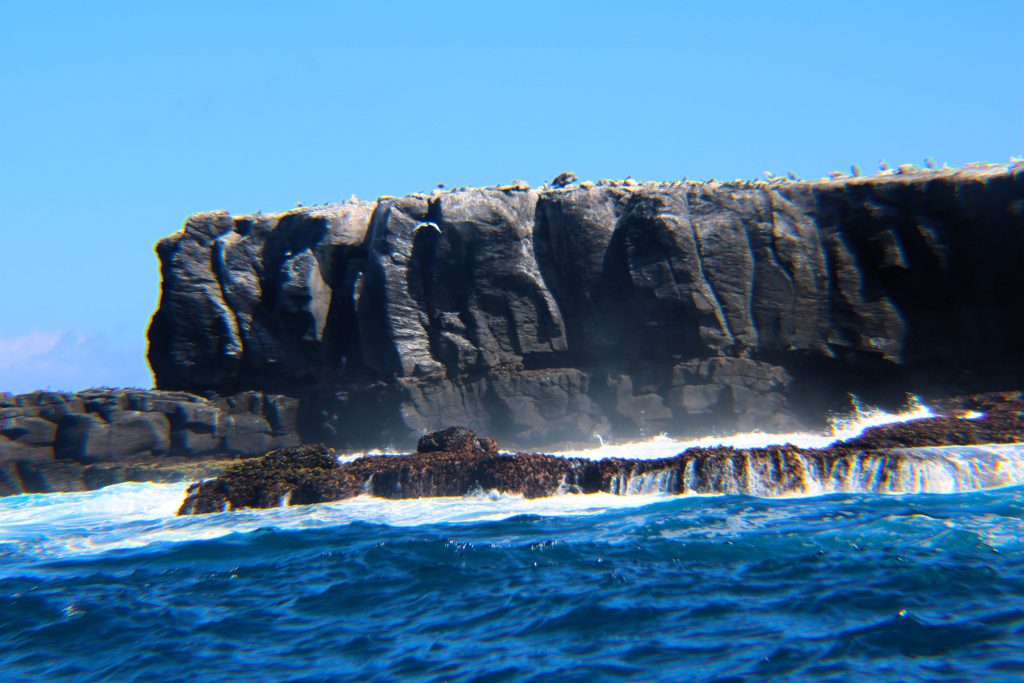
In the morning we awoke to the sight of Espanola Island, the cliffs of which are the nesting grounds of the waved albatross. All 12,000 mated pairs of the waved albatross return each year to nest on this island. Unfortunately we were unable to make landfall because of fear of avian flu, which has not infected the island but Ecuador is limiting guests to reduce the chance of spread. However, we were able to take another sea safari in search of this unique bird and the view the cliffs from the water. Our search was a success as we saw numerous waved albatross in groups bobbing on the water off shore. Often as we approached the groups of birds they would take flight by flapping their wings and running across the water (kind of like they were heading down a runway, leaving behind splashes in the water from their feet). There were many times when the birds were not bothered by our presence and we were able to get very close to them. In those moments we could hear the albatross communicating, which reminded us of the sound cows make – it’s quite odd to hear from a bird! Waved albatross have monogamous relationships and they can recognize their mate’s specific call.
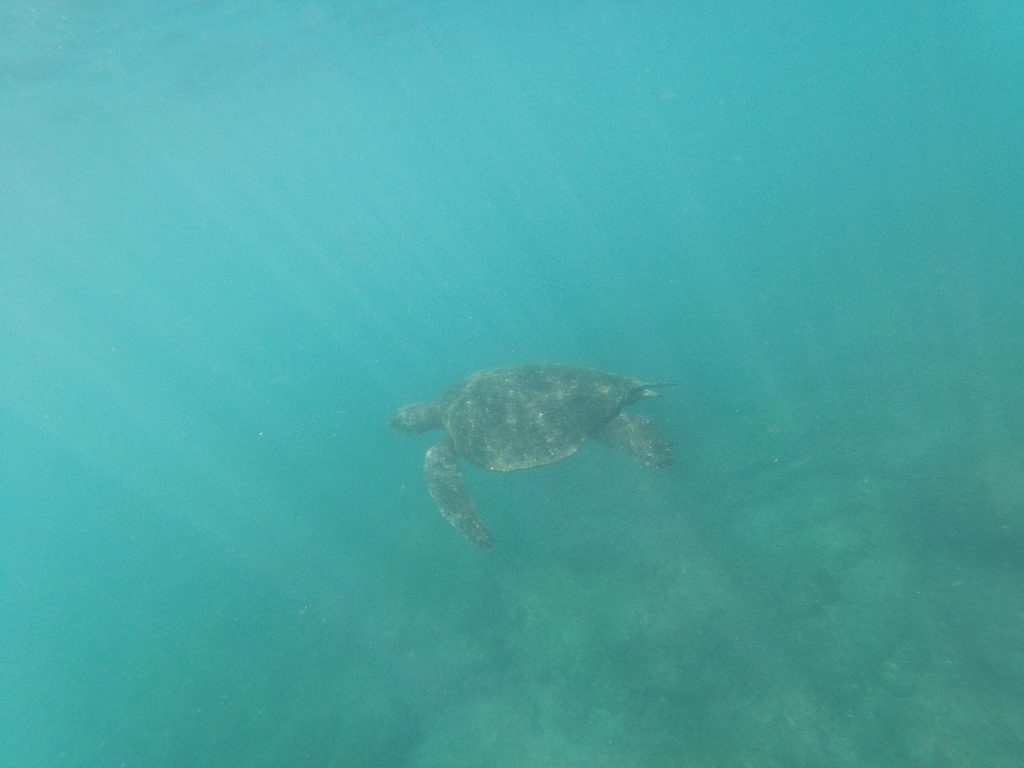
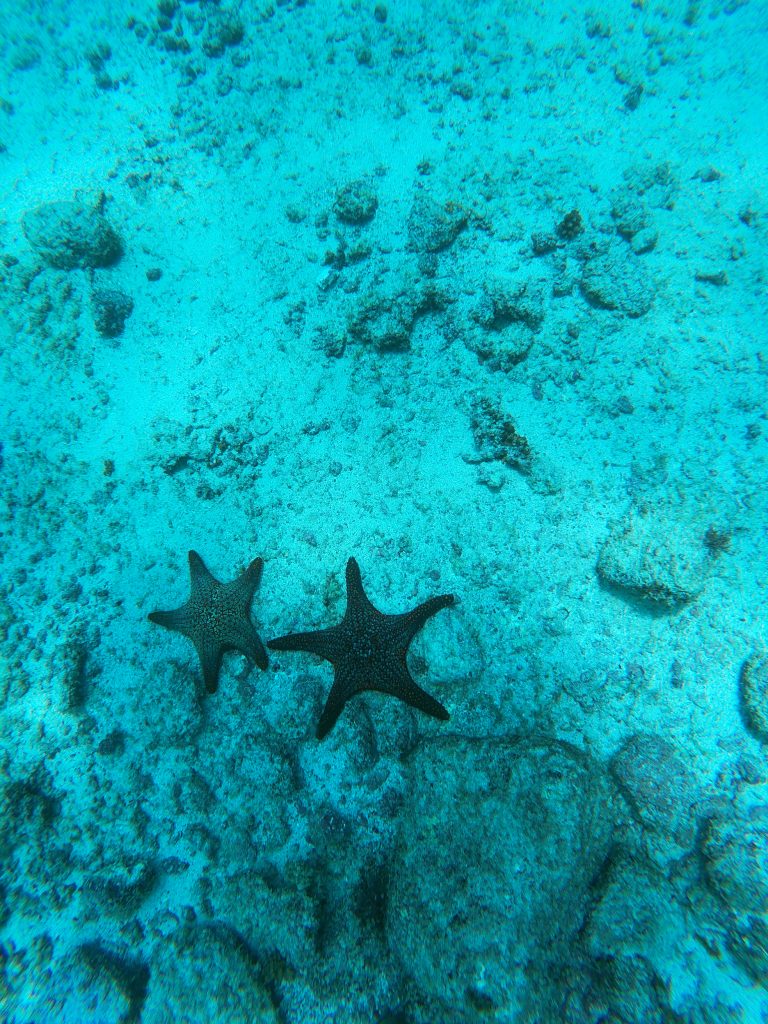
After returning to our home base the vessel began a short navigation around Espanola Island to a location just off shore in Gardner Bay. From here we snorkeled along a nearby islet. The current was very strong at times but it moved us perfectly along the island (out far enough to avoid any rocks but close enough to see the sea life). During our outing we were joined by a small sea turtle who float alongside us. We also saw many beautiful fish and multicolored starfish. The waters were crystal clear which made it very easy to spot the unique wildlife that call this part of the Galapagos home.
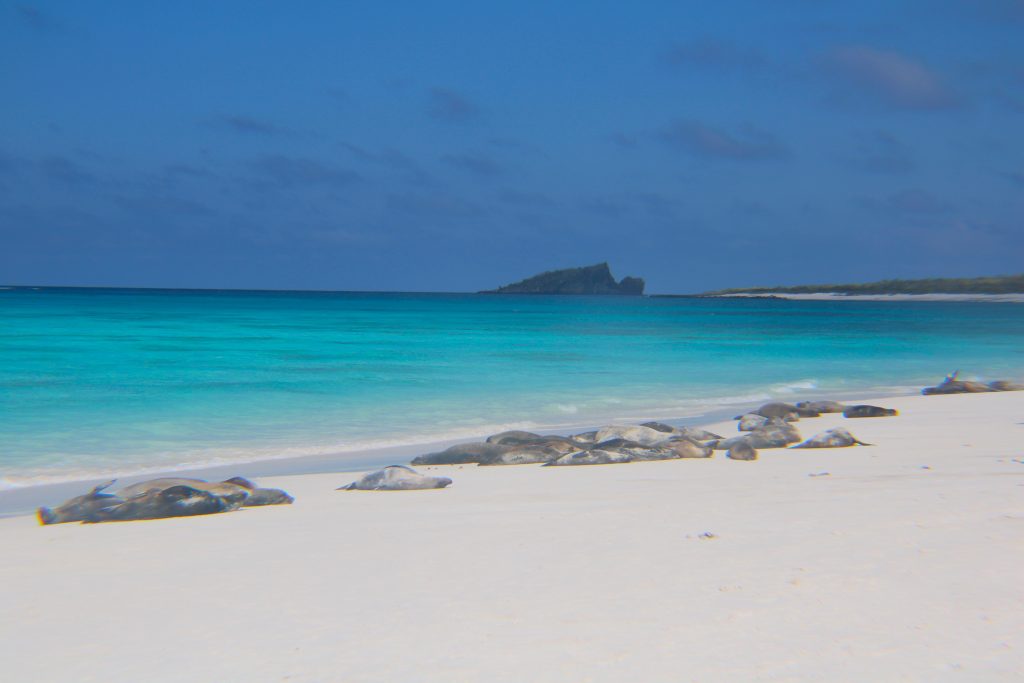
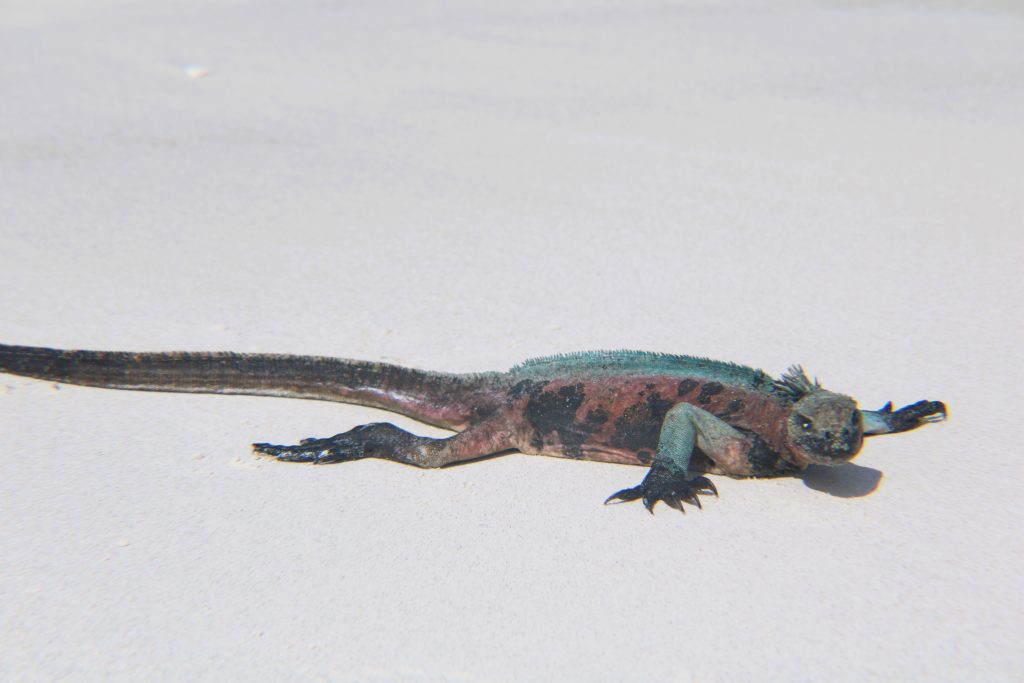
Following a brief intermission we again boarded the zodiacs but this time our destination was the beach. This is a truly stunning beach with beautiful, soft, white sand and crystal clear waters which rivaled any beach we have ever visited, minus the crowd of typical human beachgoers. We were not the only ones on the beach however, as a large colony of sea lions calls this bay their home. We were able to walk the beach amongst the many sleeping sea lions. While walking we came across one of the Christmas Marine Iguanas (a subspecies of the black marine iguanas) enjoying a well deserved nap on the warm beach. This subspecies is unique due to its red and greed hued skin. To conclude our day, we waded in the clear waters and were joined by several playful sea lions – a perfect ending to our final full day in the Galapagos.
This evening before dinner the boat navigated to San Cristóbal Island (our last stop). This evening navigation allows us to enjoy an early sea safari tomorrow (our final activity) before being dropped off in town. We have about two hours to explore town before we need to head to the airport to return to mainland Ecuador for our next adventure!
Leave a Reply
You must be logged in to post a comment.