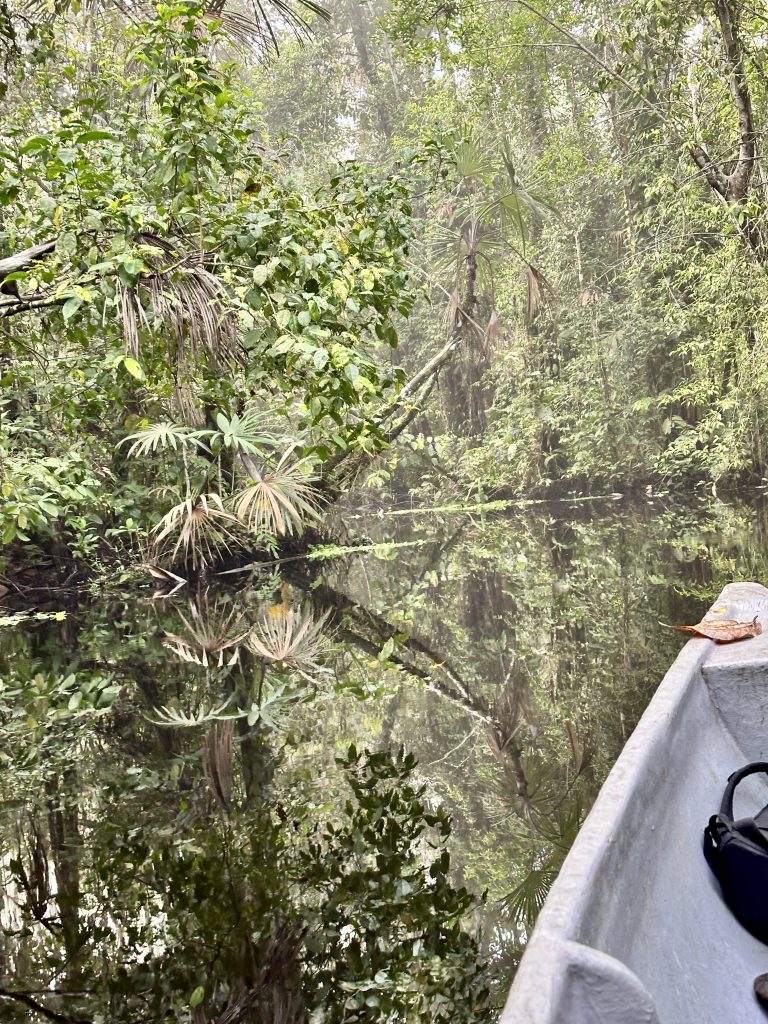
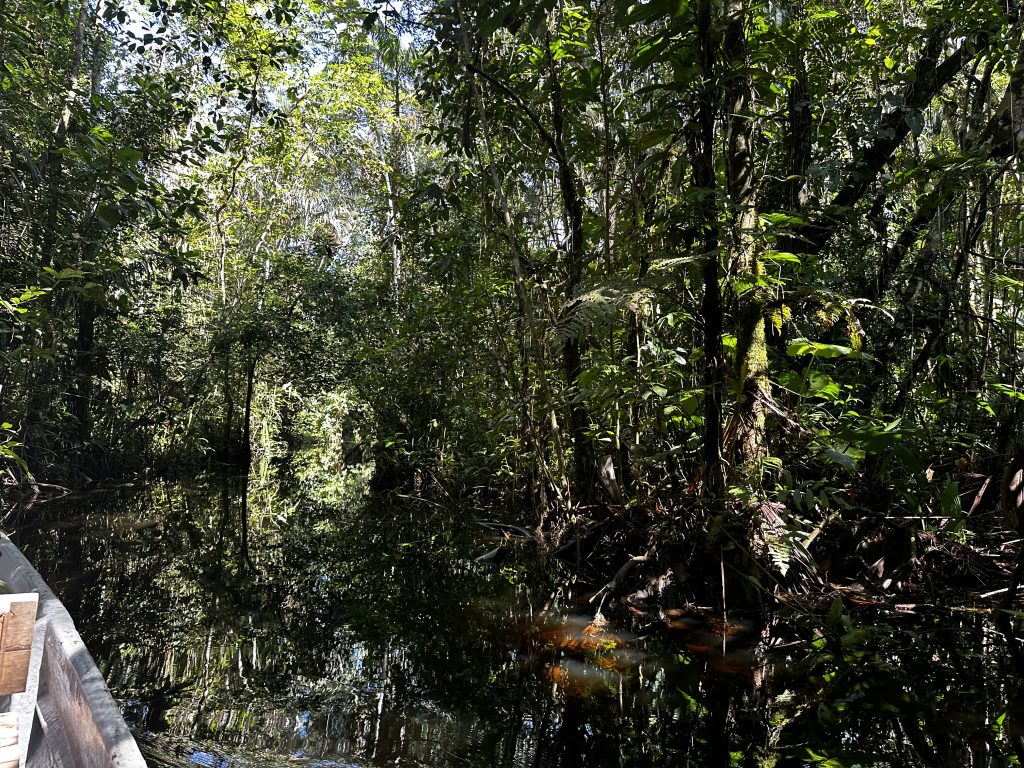
Today was another early morning (departing from the lodge at 6:30 AM). In tropical rainforests the animals are most active (and visible) in the morning – sunrise to 9:30/10:00 AM, and the later afternoon/evening – 4:30 PM to sunset. We took a peaceful canoe ride through the morning fog and twisting jungle canals. Along the way we came across a pair of Capuchin monkeys leaping from tree to tree. We also saw an enormous marching hornet’s nest in the distance, those hornets earn their name because when they feel threatened they flap their wings inside their nest and the noise they create sounds like that of a marching army or drums beating (our guides had us shout so that we could hear this unique sound).
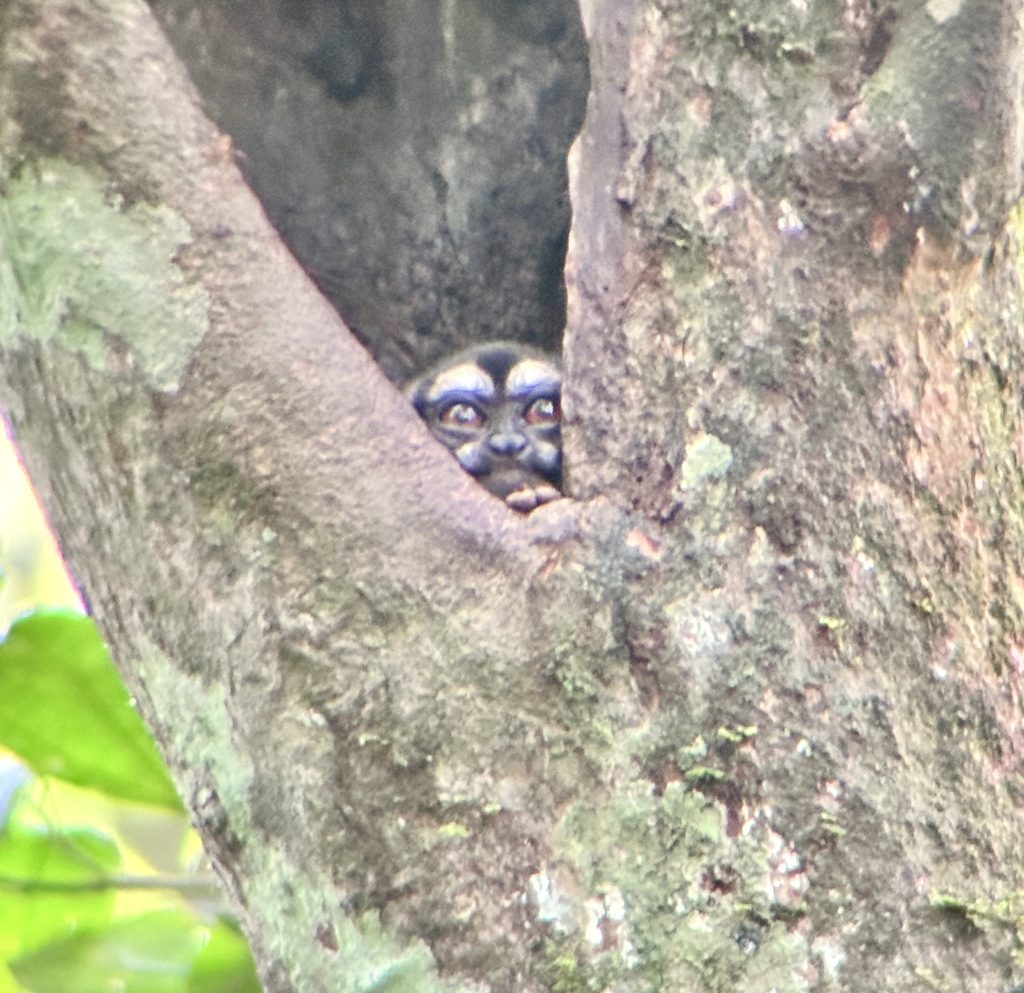
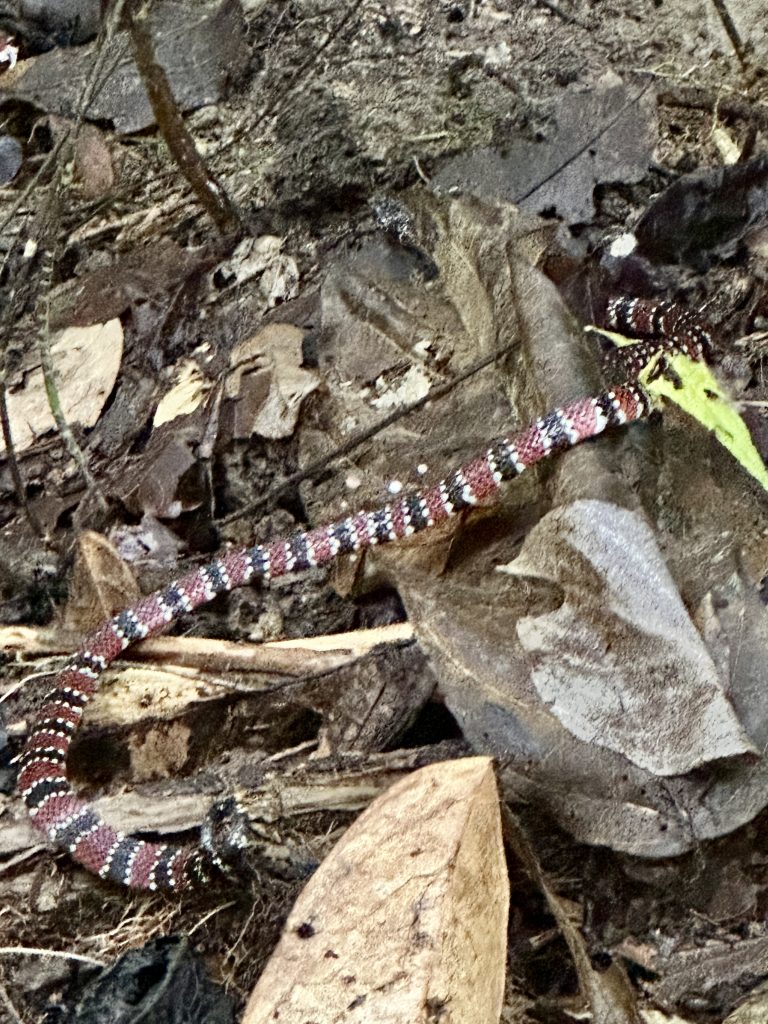
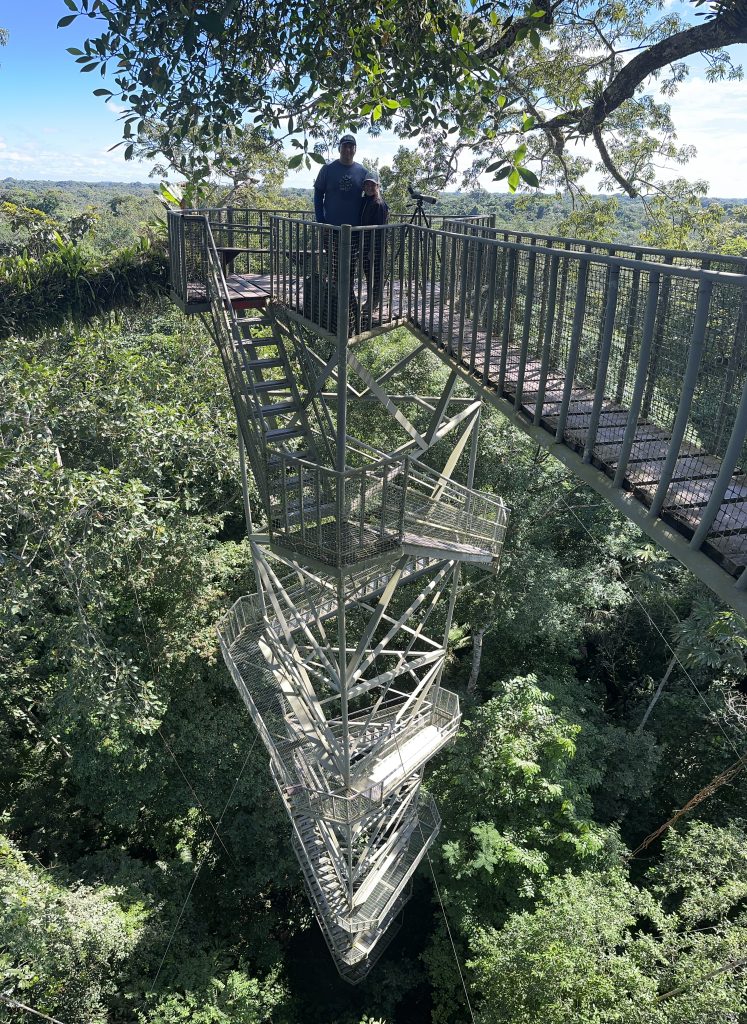
We then took a short walk to a tower that is nearly 150 feet tall built completely by hand (no heavy machinery, no power tools, etc.) next to a tall Kapok tree. During our walk we spotted an adorable night monkey sleeping in a tree. We also saw perhaps the most dangerous animal here in the Ecuadorian Amazon – a coral snake – slithering by our walkway, whose venom can kill a person in 4 hours if they are not hospitalized. We kept our distance, hands in pockets!
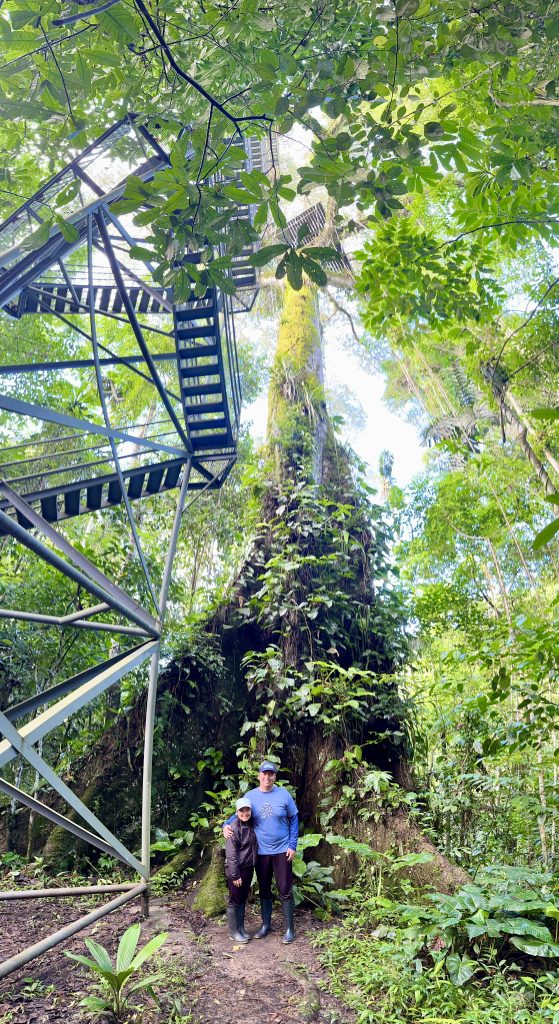
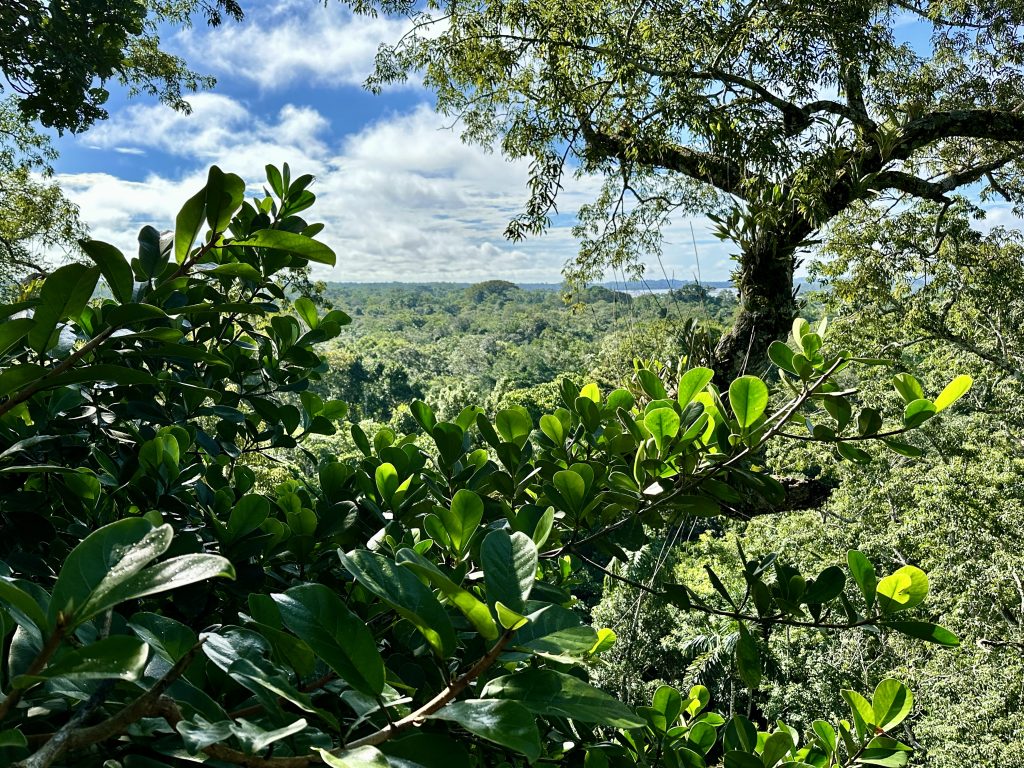
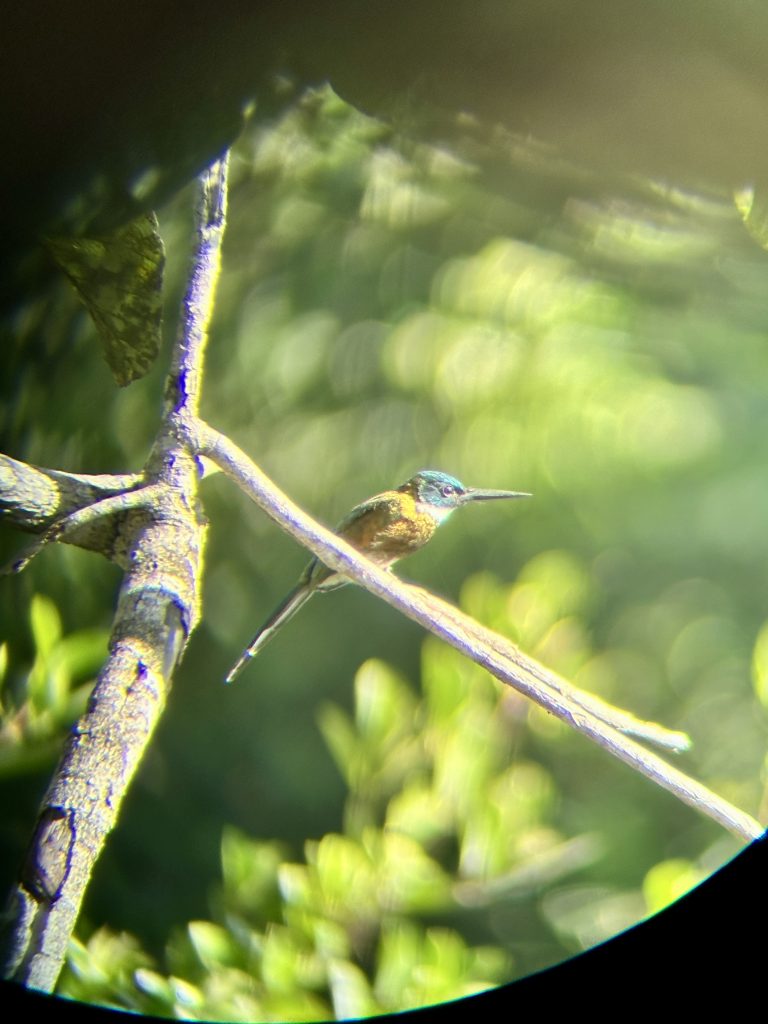
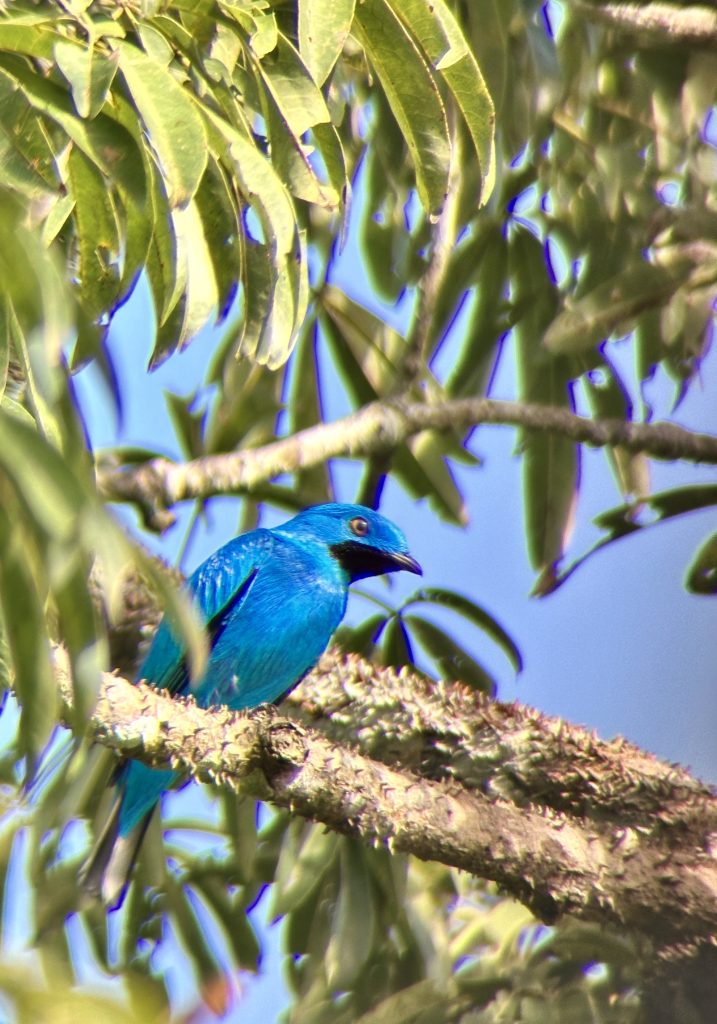
Upon reaching the tower we made our way up the numerous flights of stairs to find ourselves in a “tree house” nearly 150 feet above the ground. From this vantage point we could see the mighty Napo River (the river we came in on yesterday) and miles of Ecuadorian Rainforest high above the canopy. We were also greeted by all manner of birds including small toucans, hawks and a variety of paradise birds (to name only a few). Our guides are not only adept at spotting these birds from great distances but they are also highly skilled at communicating with and taking photos of these colorful residents through the spotting scope they brought with us. The scope allowed us to see the birds up close and personal.
On our way back to the lodge we came across a howler monkey (although we only saw a flash of him as he was some distance away from us) – the largest monkey here. The jungle is truly remarkable as you never know what you will see next. In the afternoon (following the human and animal siesta) we went out to another tower for high altitude observation. On our way to the tower we came across our fifth monkey species (the black mantled monkey) which means that there are only two species of monkeys native to this area that we have yet to see.
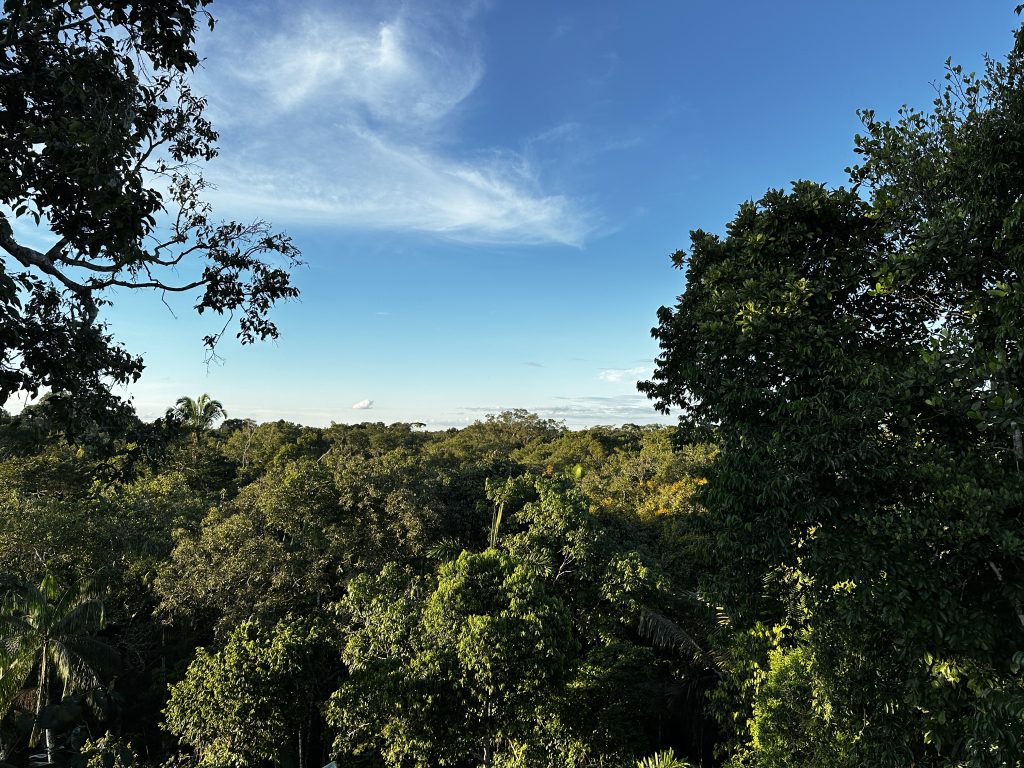
From the top of the observation tower we again had stunning views of the top of the jungle canopy and we were able to see the kapok tree we were in early today. Fun fact – trees in the Amazon do not have rings in their trunks showing how old they are because rings only appear in trees from regions that have multiple seasons. We also saw many more birds including a flock of Macaws flying in the distance.
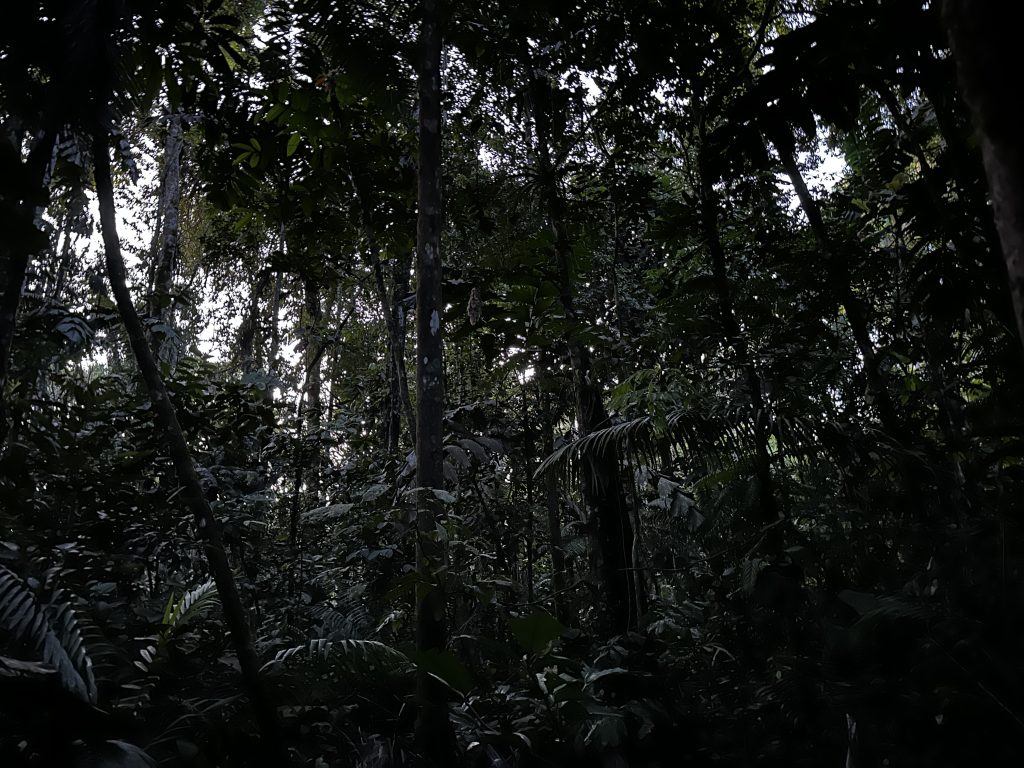
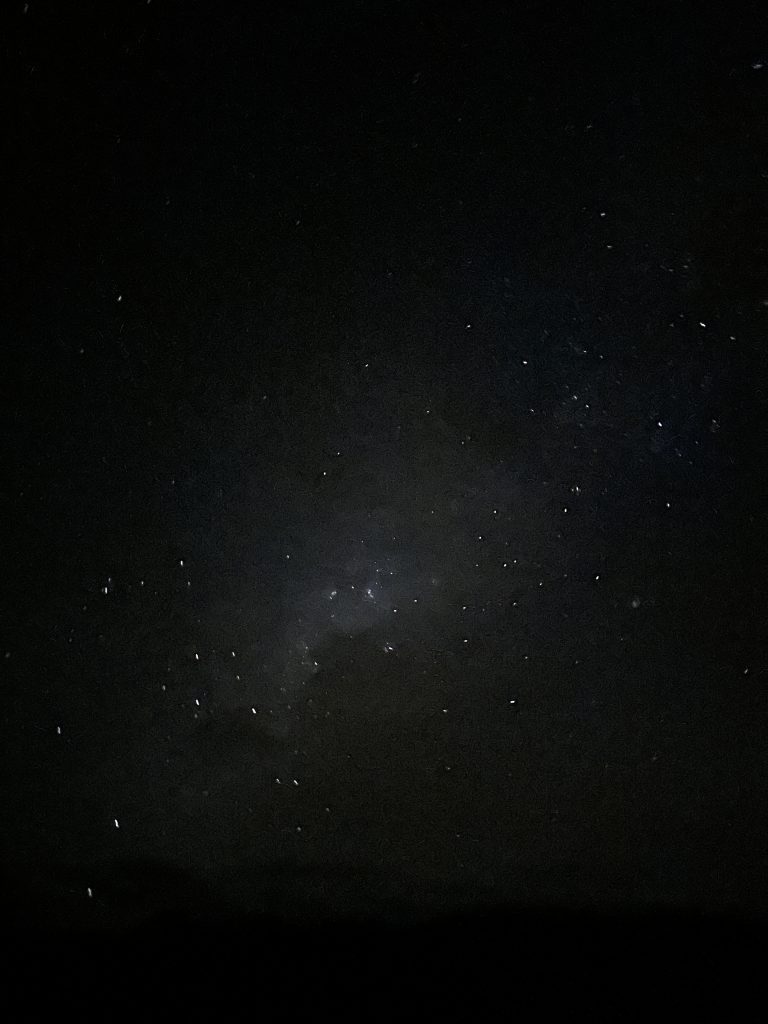
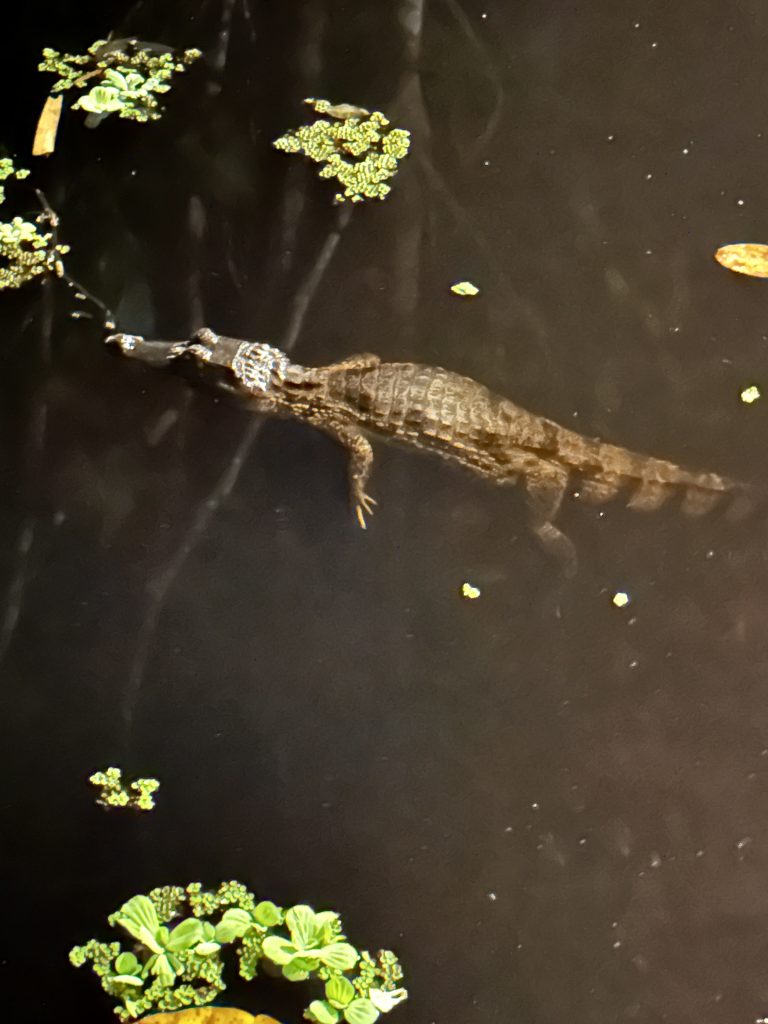
After our time above the canopy we embarked on a night walk/canoe ride through the jungle. During our walk we saw a leaf cutter ant colony with an estimated population of 8 million ants (check out the ant highway video in the gallery). We also learned from our guides that, as a general rule, if you are unsure if a wild mushroom is safe to eat, you can boil it in water and if the water turns black, it is not safe to eat, but if the water stays translucent, it is generally o.k. to eat. We canoed through the dark and lively jungle in search of caiman and other creatures. We found a couple young caiman along the banks thanks to shining a light in search of their orange or purple eyes! As we emerged from the small creek to the lagoon that the lodge is located on we were greeted by a beautiful night sky, so clear that you could see the milky way, the southern cross (a constellation only visible in the southern hemisphere), and a nearly 180 degree view of other stars. After dinner we also saw an adult dwarf caiman in the water next to the restaurant. Apparently there are three adults of this species that call the shallow waters around the lodge home.
Tomorrow morning we are heading to Sacha Lodge’s famous canopy walk suspension bridge in the hopes of finding more animals.
Leave a Reply
You must be logged in to post a comment.