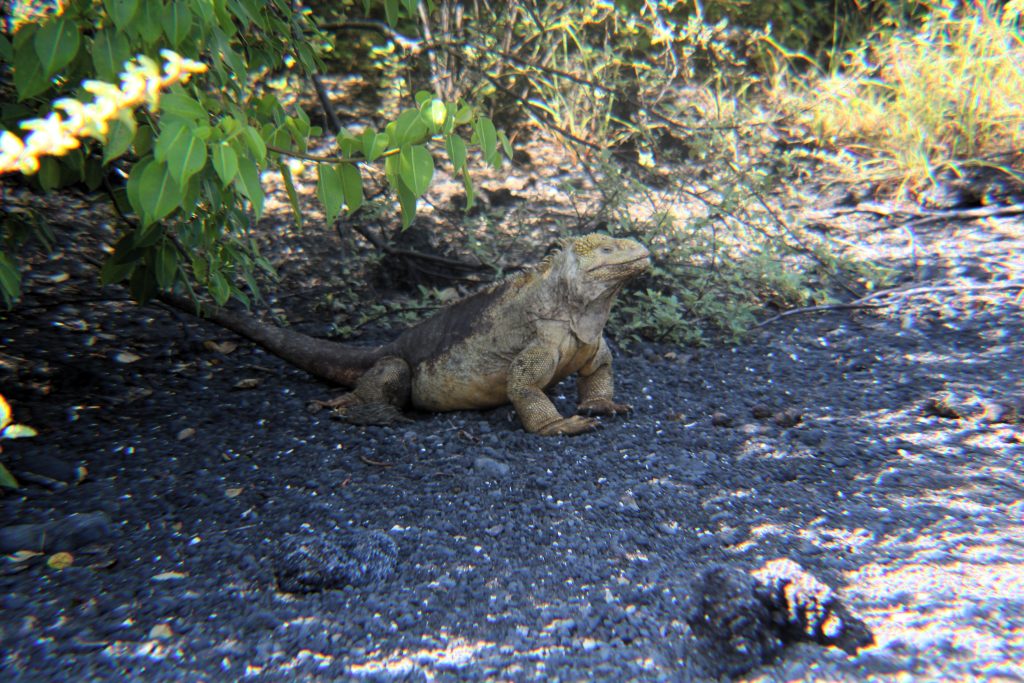
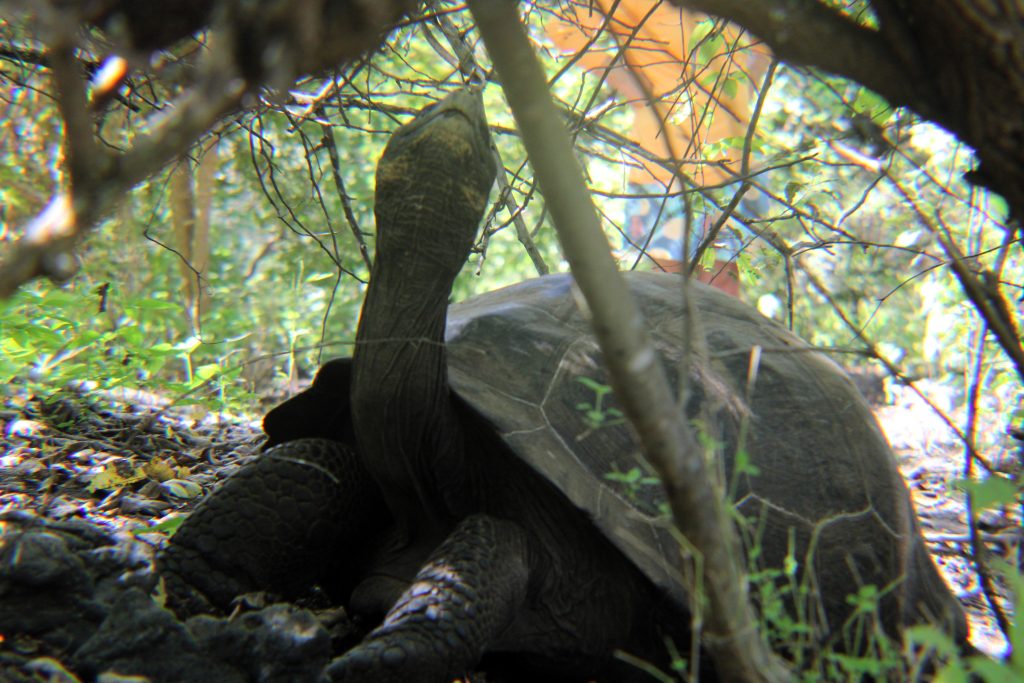
Today we explored the southwest side of Isabela Island, the largest island in the Galapagos. After breakfast we had our first wet landing (where we walked onto the beach directly from the zodiac) at Urbina Bay. We took a walk into the forest of the island and saw our first land iguanas and giant tortoises, as well as many of Darwin’s famous finches. Compared with marine iguanas, land iguanas are larger and live longer (around 60-70 years vs. 30-40 years) because they are better adapted to their ecosystems. The giant tortoises really live up to their name, one we saw weighed around 200 pounds.
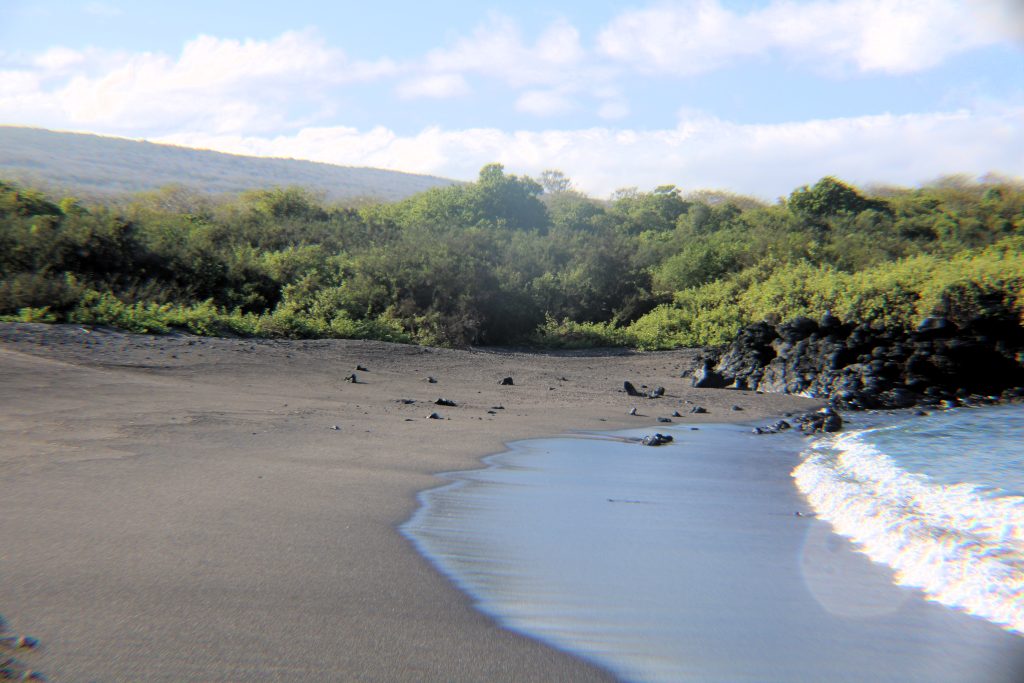
When we returned to Urbana Bay we snorkeled directly from the beach. Entering the water with fins on was a new and interesting experience for us, one that we imagine was hilarious for any onlookers. Here we swam with many sea turtles, one of which was so large that its shell was the size of a queen size bed!
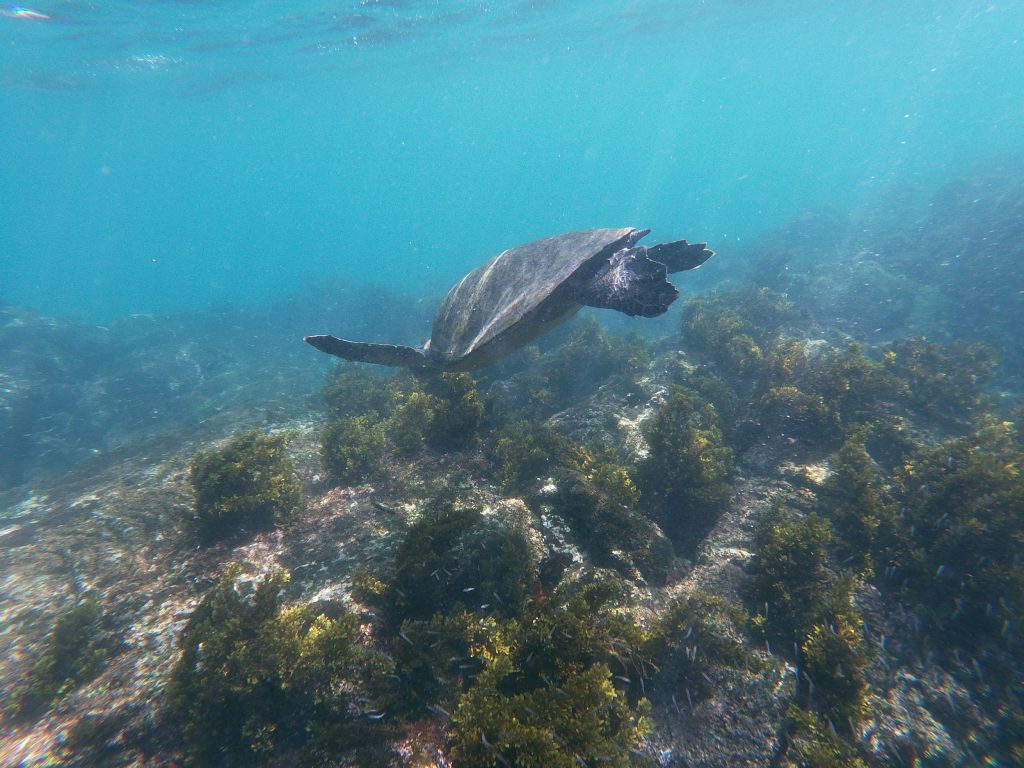
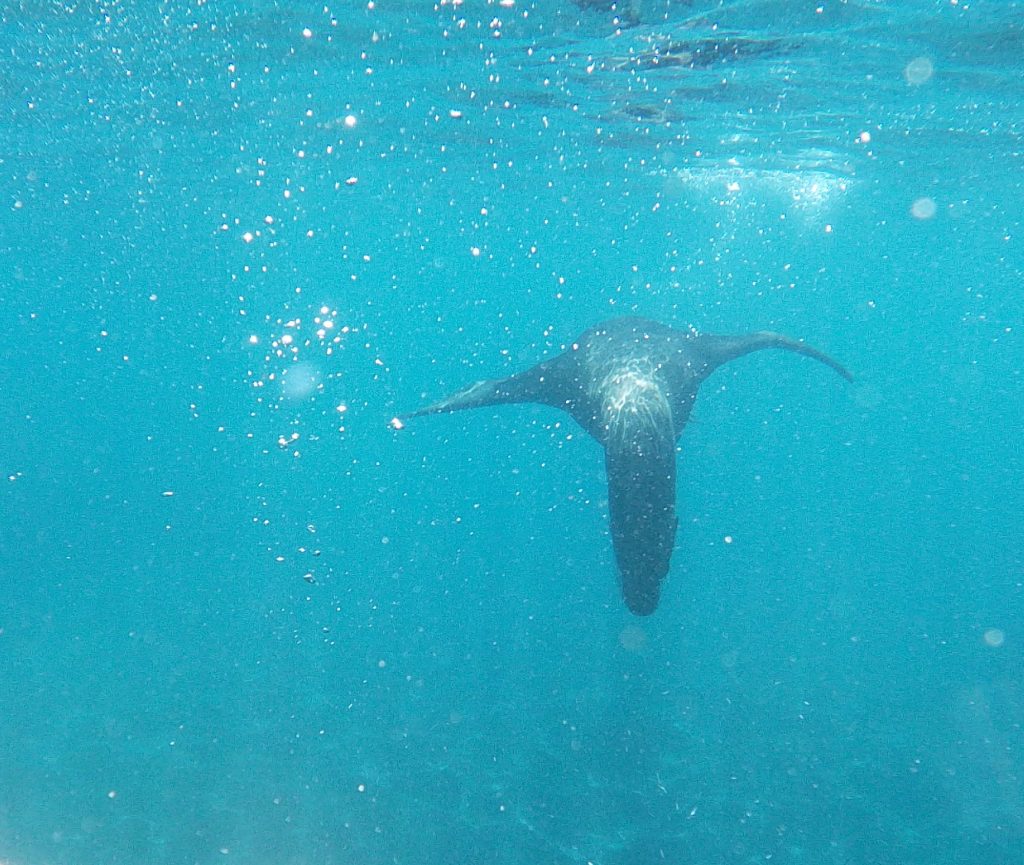
After lunch we headed to Moreno Point where we had another opportunity to snorkel, this time in deeper waters. Here we swam with beautifully colored fish, sea lions playing in the water, and turtles. We even had one sea lion swim right towards us seemingly wanting to play and got so close we could have reached out and touched it. If we hadn’t have gotten out of the way, it would have swam right into us! It was a bit unnerving but a wonderful experience. We will upload videos of today’s snorkeling tomorrow.
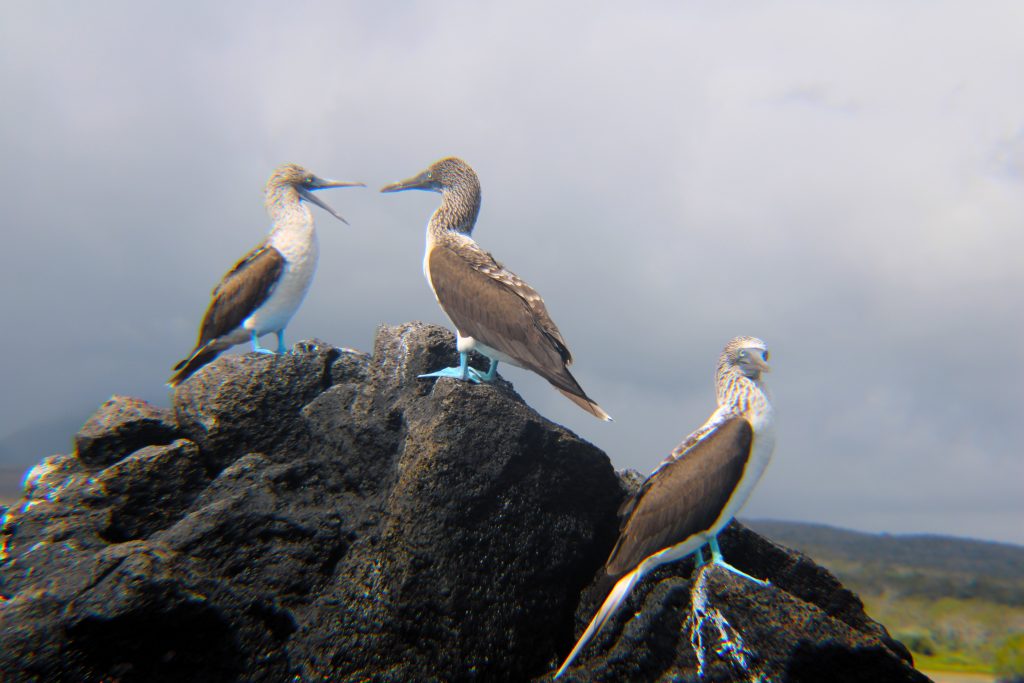
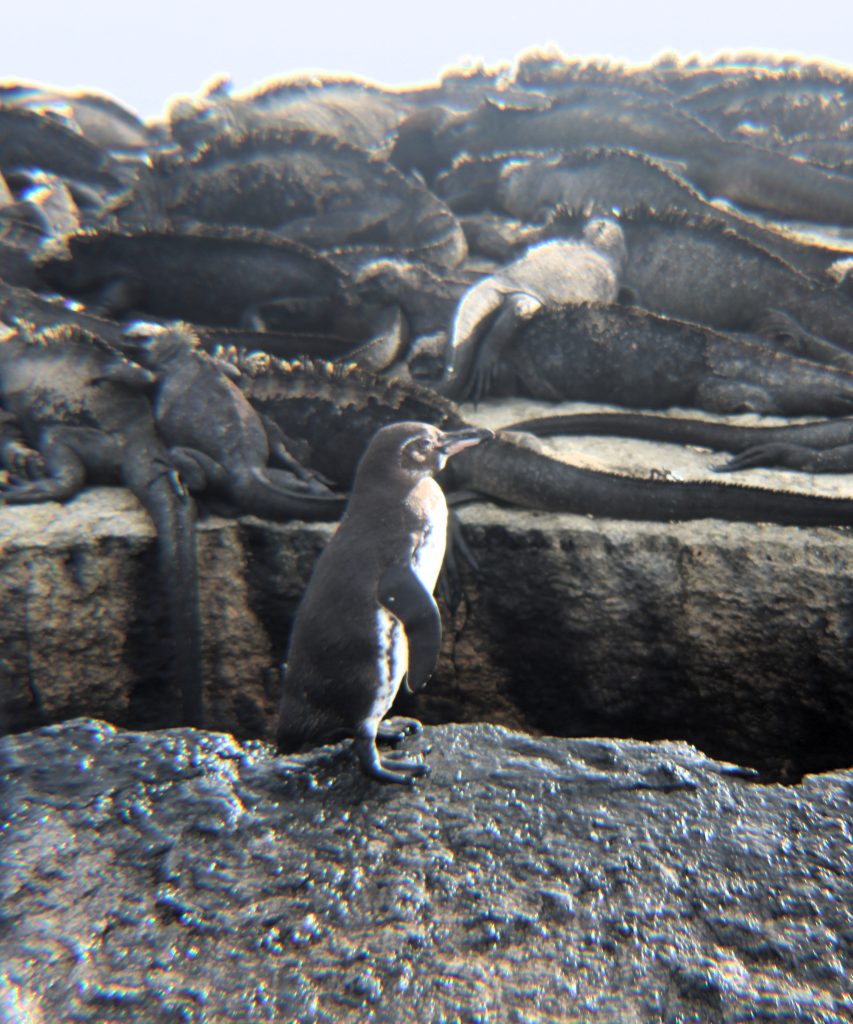
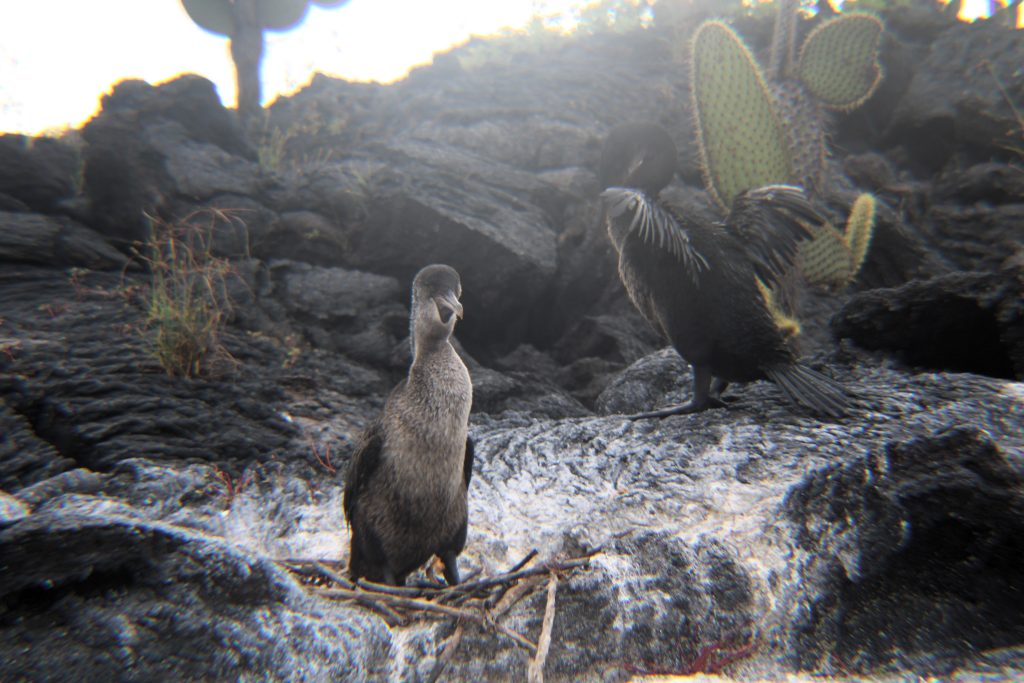
We then went on another sea safari in the zodiacs and saw the largest ‘mess’ of marine iguanas we have seen yet – around 100 on one rock! We also saw more blue footed boobies with the most vibrant blue feet we have seen yet and a new animal – the Galapagos Penguin. Galapagos Penguins are common only on the western side of the Galapagos, are the size of a house cat, and are incredibly adorable. We were also lucky enough to witness the courting dance of a couple of flightless cormorants from no more than 10 feet away (video in our gallery!).
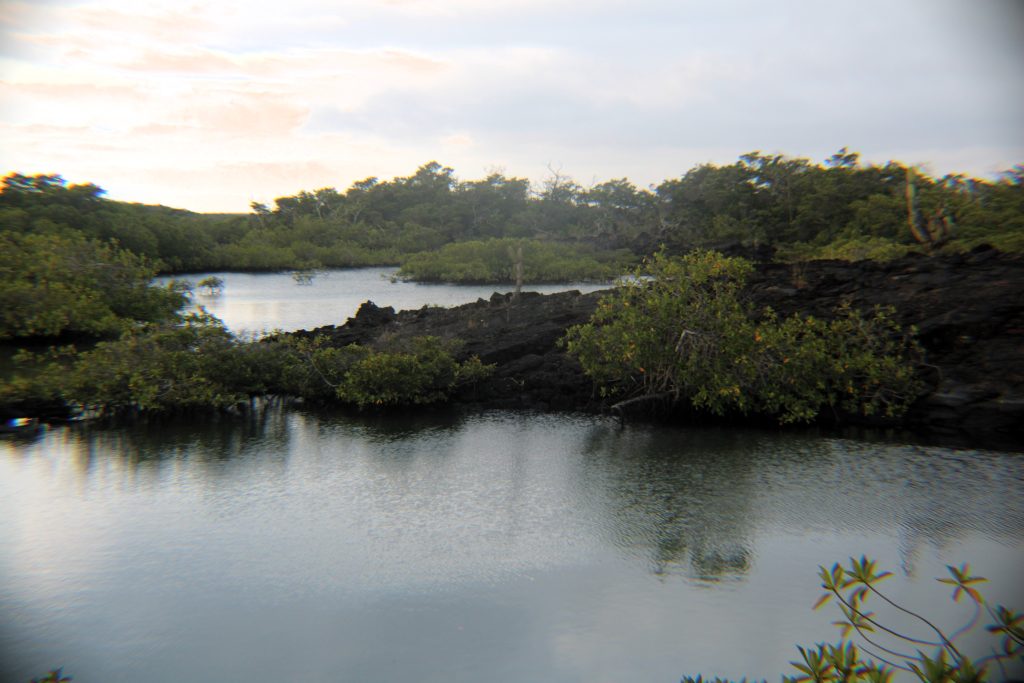
Finally we took a short walk on land through the lava fields, which were created around 1,000 years ago. After seeing new lava fields being formed last night when we witnessed the volcanic eruption, it was a full circle moment as we saw how these lava fields sprout life after hundreds of years. A number of animals call shallow ponds inside these lava fields home, including the blue heron, which we saw fishing in one such pond.
The ecosystems here continue to amaze us – where else can you see sea lions, sea turtles, giant tortoises, rare birds, iguanas, and penguins all in one day?
Tonight we are headed around the southern tip of Isabela Island. The seas are very rough tonight, so we are thankful Jay remembered the bonine!
Leave a Reply
You must be logged in to post a comment.